Workshop booking with deposits in WordPress: eight benches and £60 up front
2 Sep 2026 · Eventnetic Admin

Eight is not a tidy number. It is how many pairs of hands one person can watch while they are holding a knife.
That single fact decides most of the setup for a craft workshop. Eight benches means eight places, and eight places at £190 means one no-show costs you more than a whole night at a music venue. It also means the leather has to be bought before anybody arrives, which is why this business takes a deposit and closes its booking five days out.
The Bindery is our demo: two courses, eight benches, £60 held up front and the colour asked at checkout. Every screenshot is that site running.
What a £190 workshop costs on a marketplace
This is the one business on this blog where the platform fee is genuinely brutal, and the reason is arithmetic rather than malice.
Airbnb publishes it plainly: "For experience reservations, we typically charge a 20% service fee." Twenty percent of a £15 museum ticket is £3. Twenty percent of a £190 workshop is £38.
Put a year through it. The Bindery runs about 60 classes, averaging six of the eight benches, at an average £167 across the two courses. That is 360 places and £60,120.
| A £60,120 year | Fee | Share |
|---|---|---|
| Airbnb Experiences, 20% | £12,024 | 20.0% |
| Your own site: licence and Stripe | £1,052 | 1.8% |
The gap is £10,972 a year. That is not a saving, it is a wage. It is also 58 workshop places, which is ten classes you would be running purely to pay a platform.
Per class it is easier to feel. Six people at £190 is £1,140. Airbnb takes £228 of it. That is the leather for the next three classes, or a week of the railway arch you rent.
What the marketplace sells you for that money is a person who did not know you existed. If your classes fill from Instagram and a mailing list, you are paying £38 a head to be introduced to someone who found you anyway.
Step 1: the deposit
Here is the whole reason this scenario exists.
Total £190. Due now £60. Payable later £130.
The customer picks. Deposit or the full amount, and most take the deposit, which is fine because the deposit is not really about cash flow. It is about the difference between somebody who said yes and somebody who paid something.
Eight benches at £60 is £480 in the bank before you order a hide. The materials for eight leather covers run to about £176. So the deposits cover the thing that cannot be un-bought roughly three times over, and the £130 balances are collected on the day when everybody is standing in the room anyway.
You set it on the ticket, as a fixed £60 or as a percentage. We use fixed here because £60 is a number a person can hold in their head, and 31.6% is not.
One thing to know before you rely on it: a deposit needs an online payment method. A site that only takes cash on arrival will show the full price and no choice, because there is nothing to take a deposit of. That is deliberate, and it is the sort of thing you discover at the worst moment if nobody writes it down, so we are writing it down.
Step 2: booking closes five days out
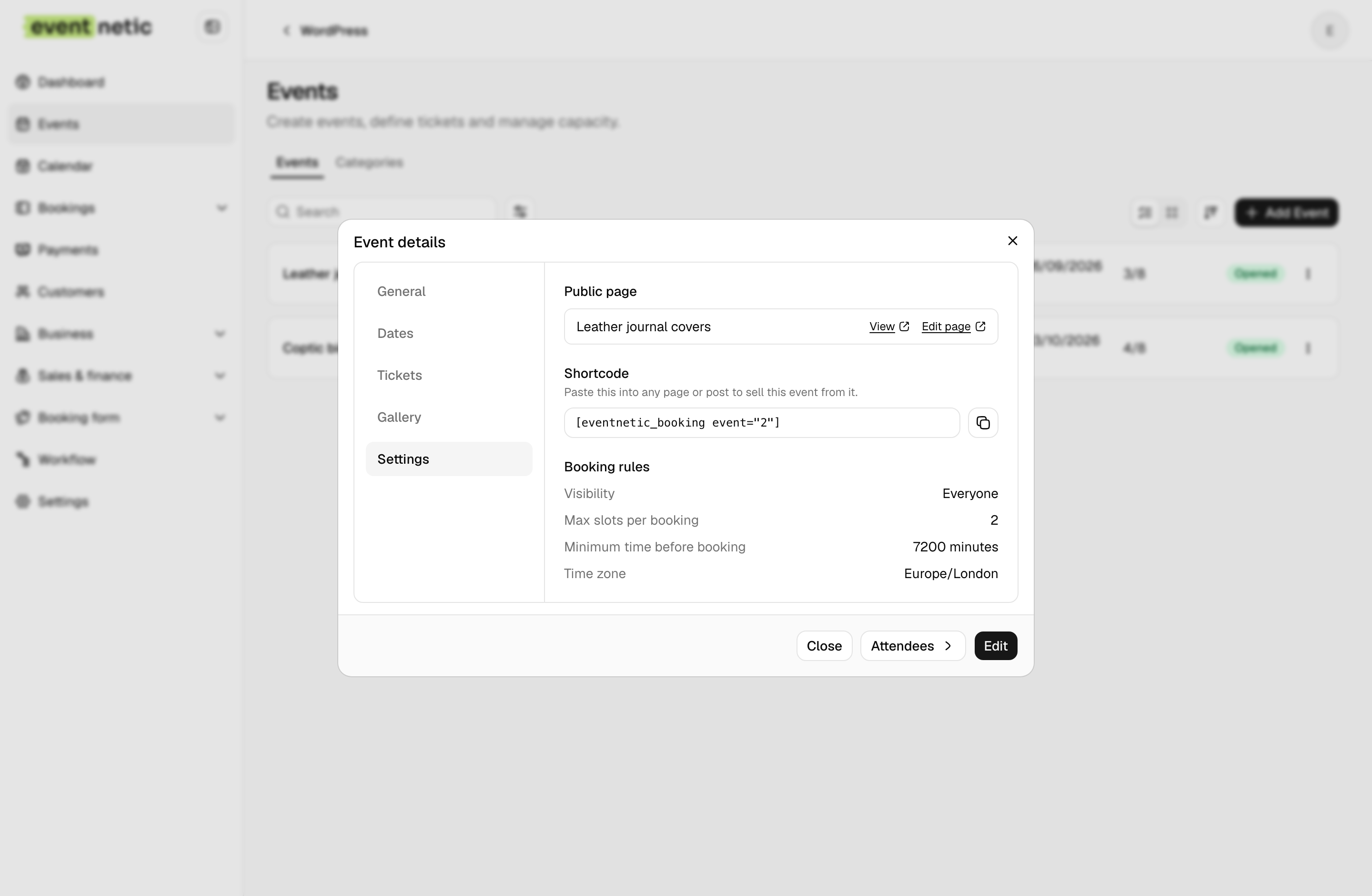
7,200 minutes. Five days.
A walking tour uses sixty minutes for this field because the guide only has to walk to the meeting point. A bindery uses five days because the leather is cut to size before the day, and a booking that lands on Friday night for a Saturday class is a booking nobody can supply.
The number is not a limitation you work around. It is how long it takes you to get ready, written down where the booking form can enforce it. Get it right and you stop having the conversation where somebody books at 11pm and you spend Saturday morning apologising.
Step 3: asking the question whose answer you have to buy
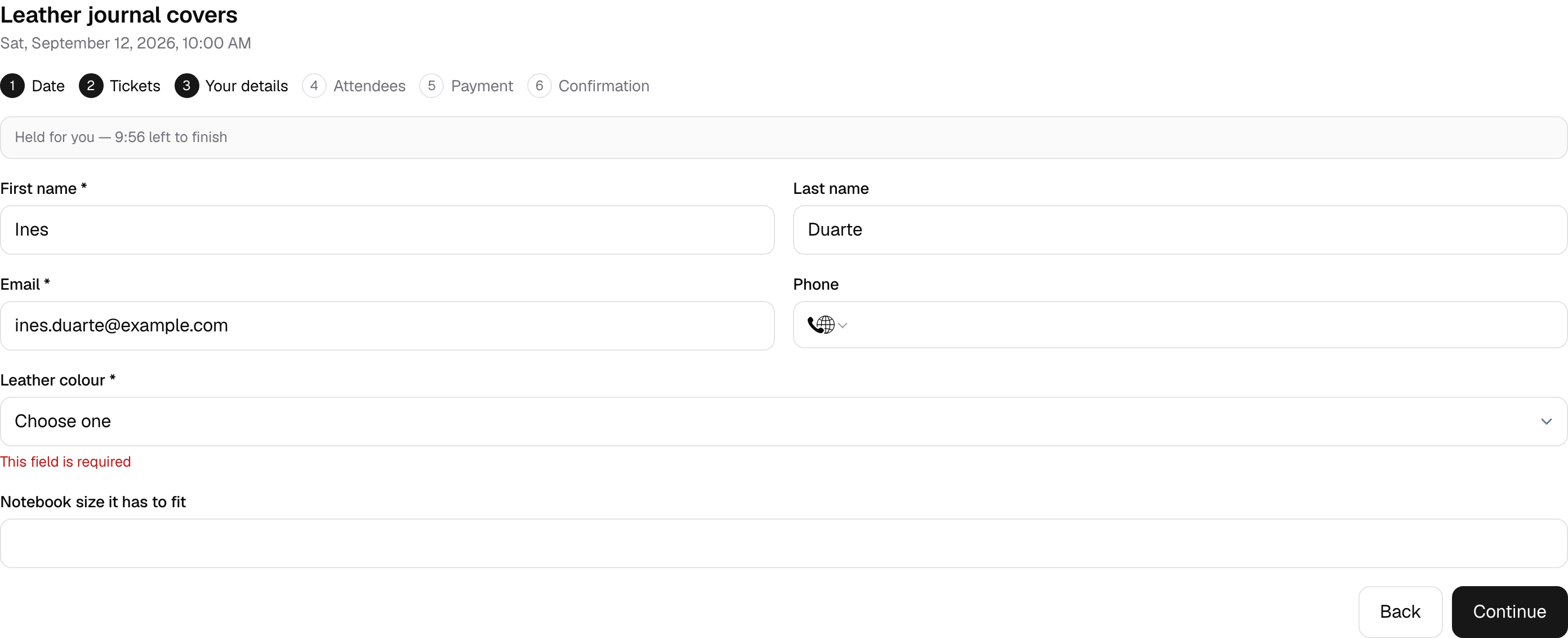
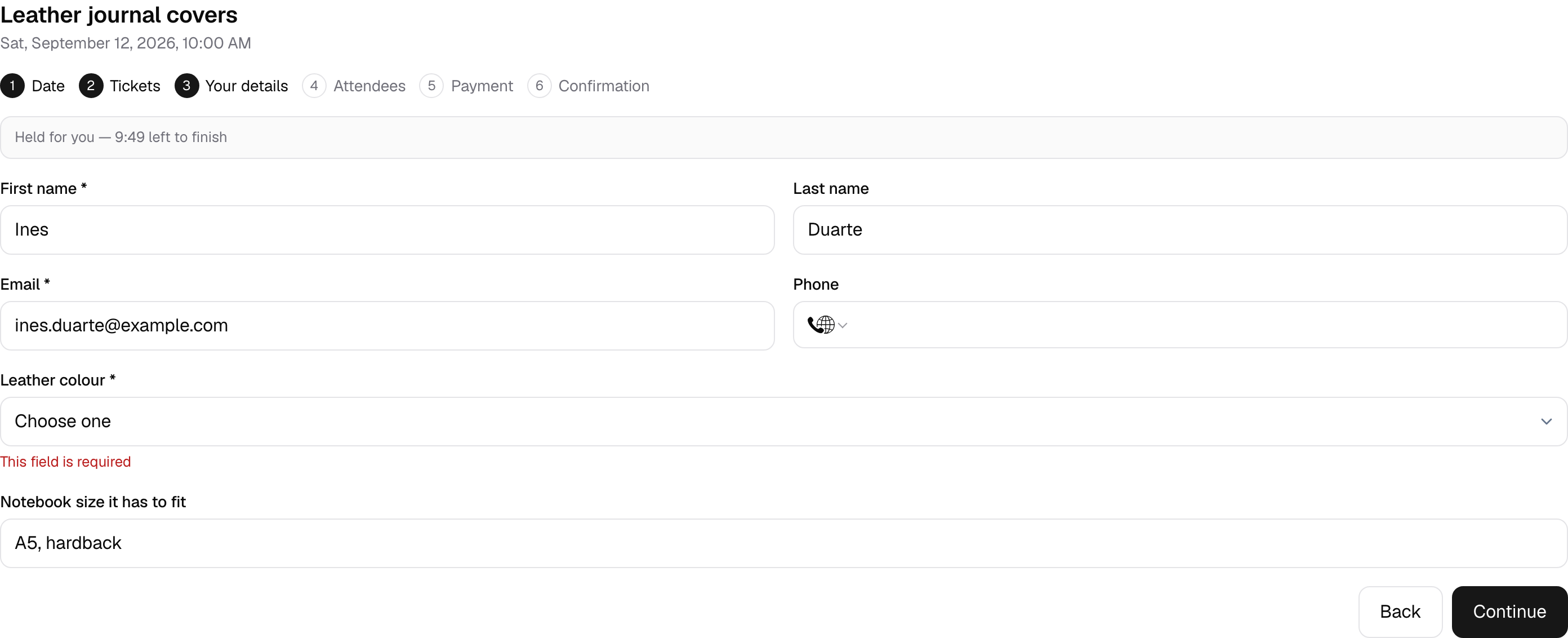
Natural, oxblood, forest or black. That screenshot is the checkout refusing to go any further, which is the point. A workshop where somebody turns up wanting a colour you did not order is a workshop that goes wrong quietly, so the question is not skippable.
The second field, the notebook size, has no asterisk. Optional because most people do not know, and it does not stop the class. The ones who do know save you a guess.
The setting that matters here is not the fields, it is the scope. This form asks once per booking, not once per attendee. Two friends booking the same bench are one order of leather, and asking the same person twice is how a checkout starts to feel like paperwork. A dietary requirement would be the other way round. Per person, because people eat separately.
Step 4: two per order, and no more
Both courses cap at two benches per order.
Eight places and a cap of two means a single order cannot take a quarter of the class. That is not about touts, it is about the shape of the group. Four people who all know each other turn a workshop into a private booking for everyone else in the room, and the tutor loses the class.
If somebody genuinely wants four benches, they can call you and you can decide. A form cannot make that judgement and should not try.
Step 5: two courses, not one with options
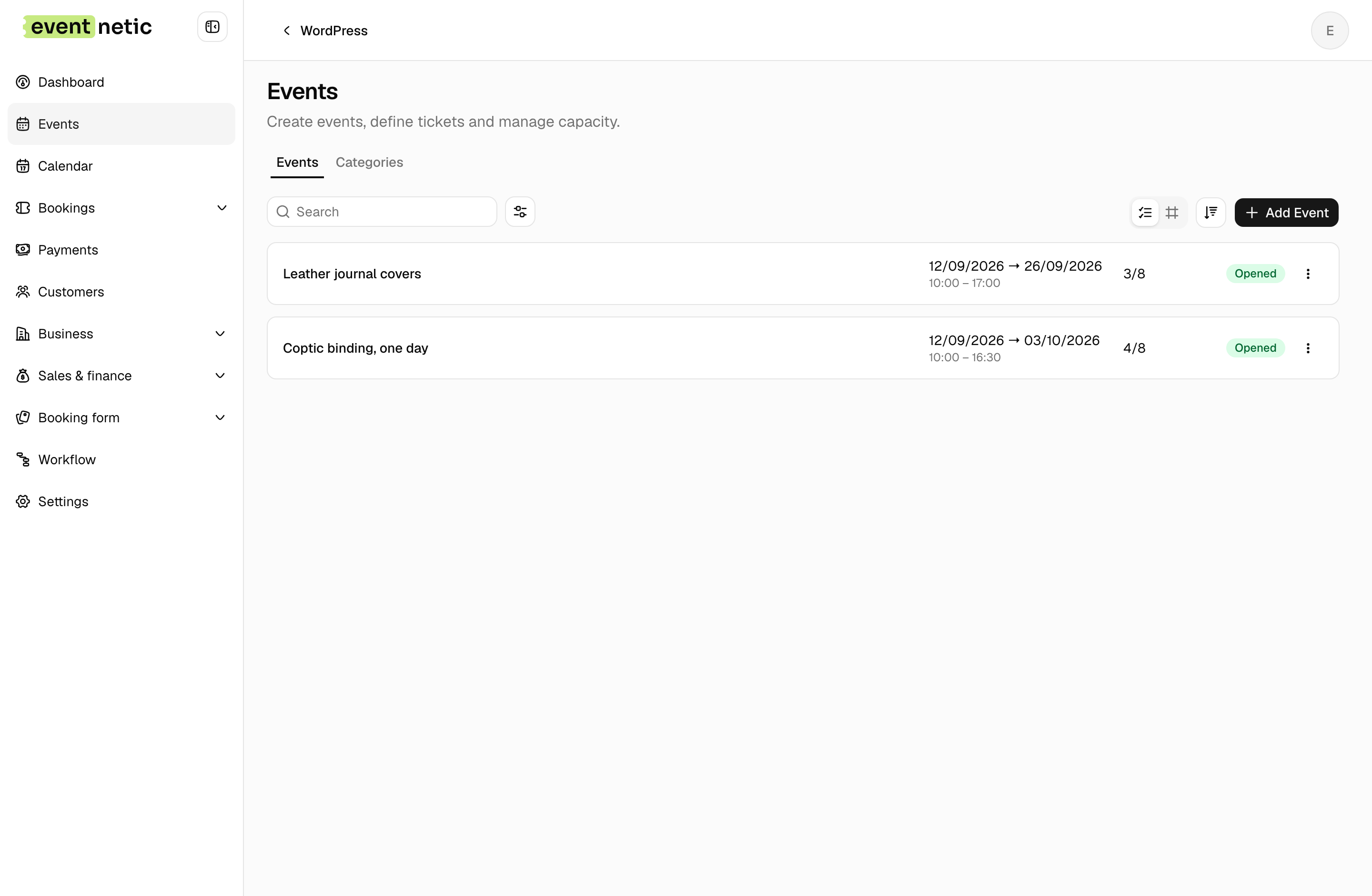
Coptic binding is £145 with a £40 deposit. Leather journal covers is £190 with a £60 deposit. They are separate events rather than two tickets on one.
The rule we keep coming back to: if it has its own capacity, its own dates and its own materials, it is its own event. Same benches, different Saturdays, different things to buy beforehand.
Both run on Saturdays, because that is when people who have jobs can come. The Coptic course has four dates on sale and the leather course three, which is the sort of thing you change from one screen rather than by rebuilding anything.
What we do not do
No way to pay the balance online. This is the real limit of the deposit, and it is worth being exact about. The order stores the total, what was paid and what the deposit was, so the £130 is a number the system knows. You can build a workflow that fires a week before the class and emails the customer what they owe, because there is a planned trigger for that and a merge tag for the amount. What there is not is a link they can click to settle it. Nothing chases the balance and nothing takes it. You collect it on the day.
No materials or stock tracking. The colour question tells you what to order. It does not deduct anything from an inventory, because there is no inventory. A spreadsheet still does that job.
No gift vouchers. A large share of craft workshop bookings are presents, and a voucher somebody redeems later is a real gap. We have coupons, which are a discount rather than a stored value, and they are not the same thing.
No marketplace listing. Same as always. We sell from your site to people who are already looking at it.
Go and hold a bench
The Bindery is live with both courses, real dates, the colour question and a working deposit.
Open the workshop demo and take a leather bench to the payment step. The card option is Stripe in test mode, so 4242 4242 4242 4242 with any future date will go through and nothing is charged to anybody.
Watch the total. £190 at the top, £60 due now, and a customer who has just made your Saturday real.
Every screenshot is the running demo, not a mock-up. Prices, deposits, the lead time and the form are read from it. Airbnb's service fee is quoted from their own help centre, opened and read on 2 September 2026. The year modelled here is our assumption and is stated so you can substitute your own.


