Conference ticketing in WordPress: three days, bought once
2 Sep 2026 · Eventnetic Admin

A conference is three days that people buy once.
That sentence contains the decision the whole setup turns on, and it is the opposite of every other venue we have written about. A cinema sells the same room over and over. A conference sells one thing that happens to last until Wednesday.
This is how to build it in WordPress. Lisbon Product Days is our demo: three days at a 400-seat auditorium, four ticket types, VAT, invoices and a question at checkout. Every screenshot below is that site running.
What a conference costs on a ticketing platform
Start with the honest part: conferences suffer least from platform fees, because their tickets are expensive.
Eventbrite charges organisers 3.7% + $1.79 per ticket, then 2.9% per order. On a €220 pass that is about €16.31, which is 7.4%. A museum selling €15 tickets pays 18.5% for the same service, because the fixed €1.79 is a fifth of their ticket and a rounding error on yours.
| One conference, 400 passes at €220 | Platform | Your own site |
|---|---|---|
| Per ticket | €16.31 | €6.68 |
| Across the event | €6,524 | €2,672 |
| Share of the gate | 7.4% | 3.0% |
So the percentage argument is weaker here. The absolute one is not. €3,850 is a keynote speaker's travel, or the coffee for three days, on one event a year.
Step 1: one event, three days long
Here is the modelling decision, and it is the one people get wrong.
A conference is one date, not three.
Dates in Eventnetic are sellable units. Give the event three of them and the booking page asks the buyer to choose a day, then hands them a ticket for Tuesday only. That is a day-pass model, and it is not what a conference sells.
Days two and three are duration, not inventory. So the event starts on the 12th, ends on the 14th, and carries one date. Our own demo had this wrong until we wrote this post, which is how we know the mistake is easy to make.
It is also the case the recurring post uses as its example of dates that are deliberately not interchangeable. A yoga class sells Tuesdays separately because they are interchangeable. A conference does not, because week two of a story makes no sense without week one.
Step 2: four tickets, three of them rationed
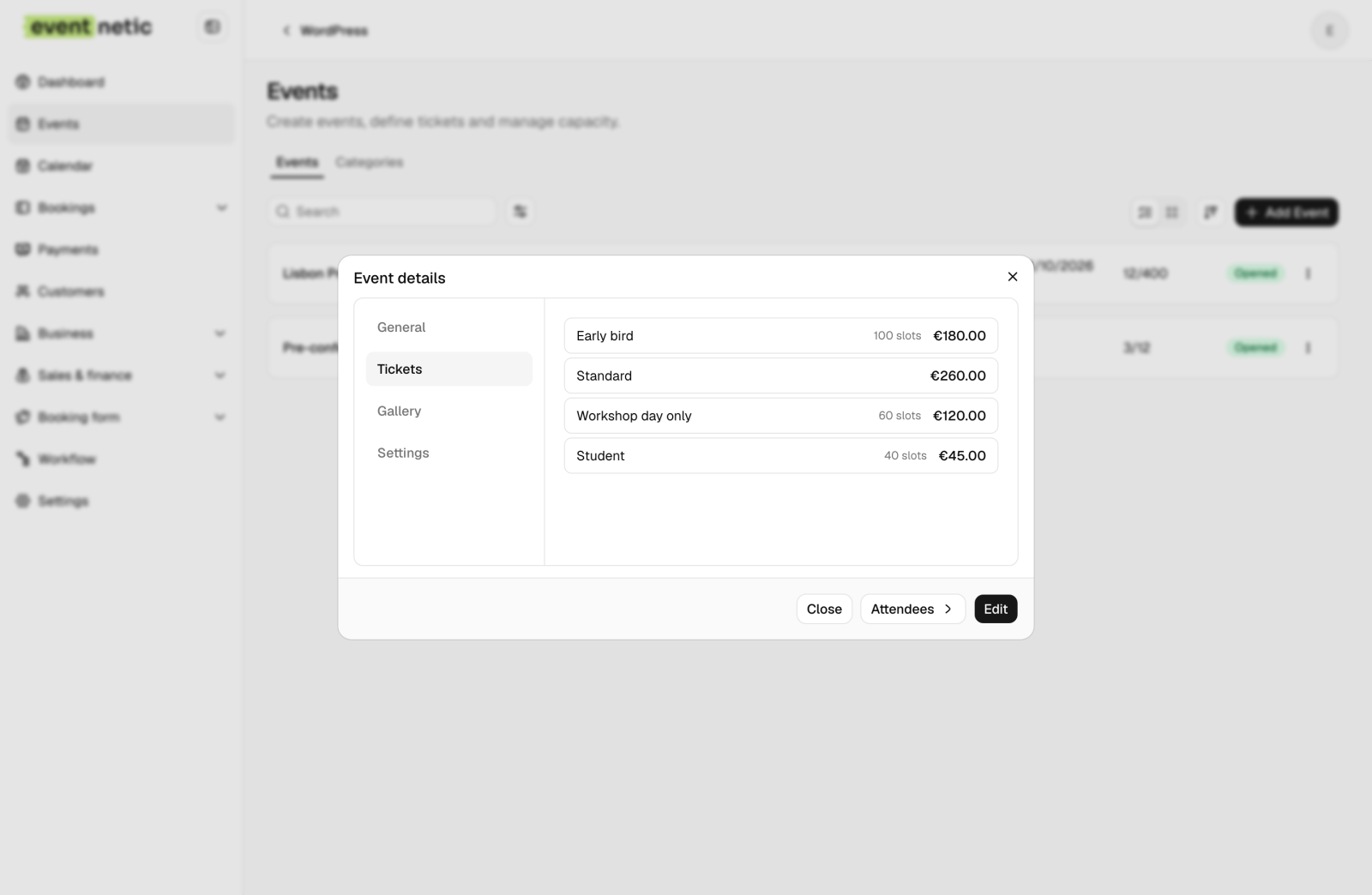
Read the slot counts, because they are the interesting part.
Early bird holds 100. Workshop day only holds 60, limited by the number of tables in the small rooms rather than the size of the hall. Student holds 40, which is a decision about how much of the room you are willing to subsidise. Standard has no allocation and takes whatever is left.
Those three allocations are own stock, which sits on top of the shared pool rather than being carved out of it. The auditorium seats 400, so the pool is 200 and the allocations are 200. Set the pool to 400 and you have quietly put 600 people in a 400-seat room.
That is the single easiest mistake to make in this product, and we made it in four of our own demos before catching it.
Step 3: an early bird that actually expires
Most early birds are a promise nobody keeps, because closing them is a manual job somebody forgets on a Friday.
This one has a sale end date on the ticket, so it closes on the day whether or not it has sold out. It also has 100 slots, so it closes early if it does. Whichever comes first.
The reason to bother is that an early bird which quietly stays open teaches your audience to wait. One that visibly shuts teaches them to buy.
Step 4: VAT, once
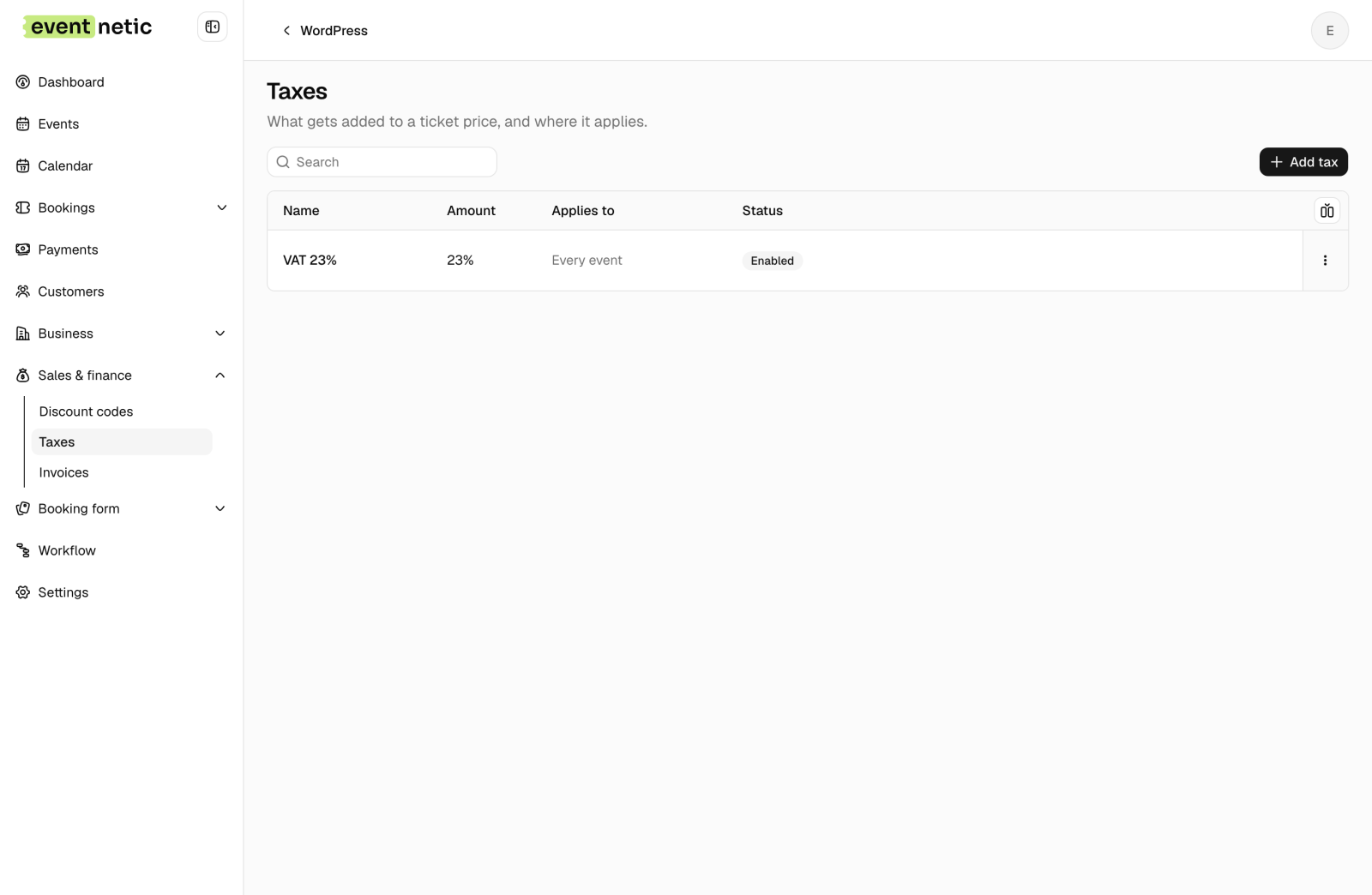
One rule, 23%, every event. Set it and stop thinking about it. It lands on the checkout total, on the invoice, and in the export, without a spreadsheet reconciling three of them afterwards.
Step 5: the invoice somebody has to expense
This is the difference between selling to people and selling to companies. A consumer wants a confirmation email. A company wants a numbered document with a VAT line, because somebody in finance will reject anything else.
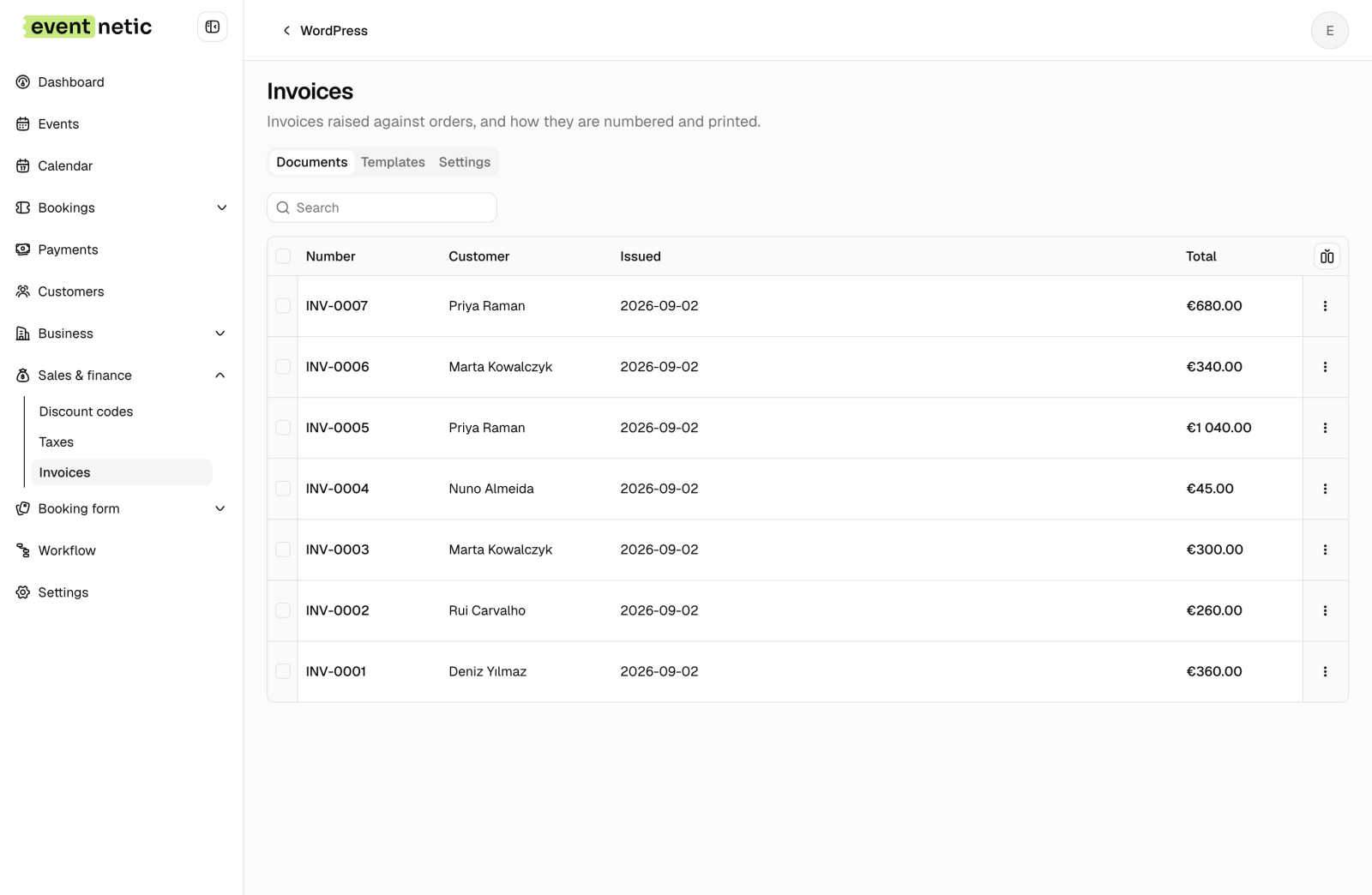
Sequential numbers, no gaps, per customer, with the tax on them. The numbering series is yours to configure: prefix, padding, and whether it resets each year.
Gaps matter more than they sound. A numbering series exists precisely so two invoices cannot share a number and none can go missing, which is what an auditor checks first.
Step 6: asking a question at checkout
Conferences need answers that a ticket type cannot express. Dietary requirements. A job title for the badge. Which track somebody is coming for.
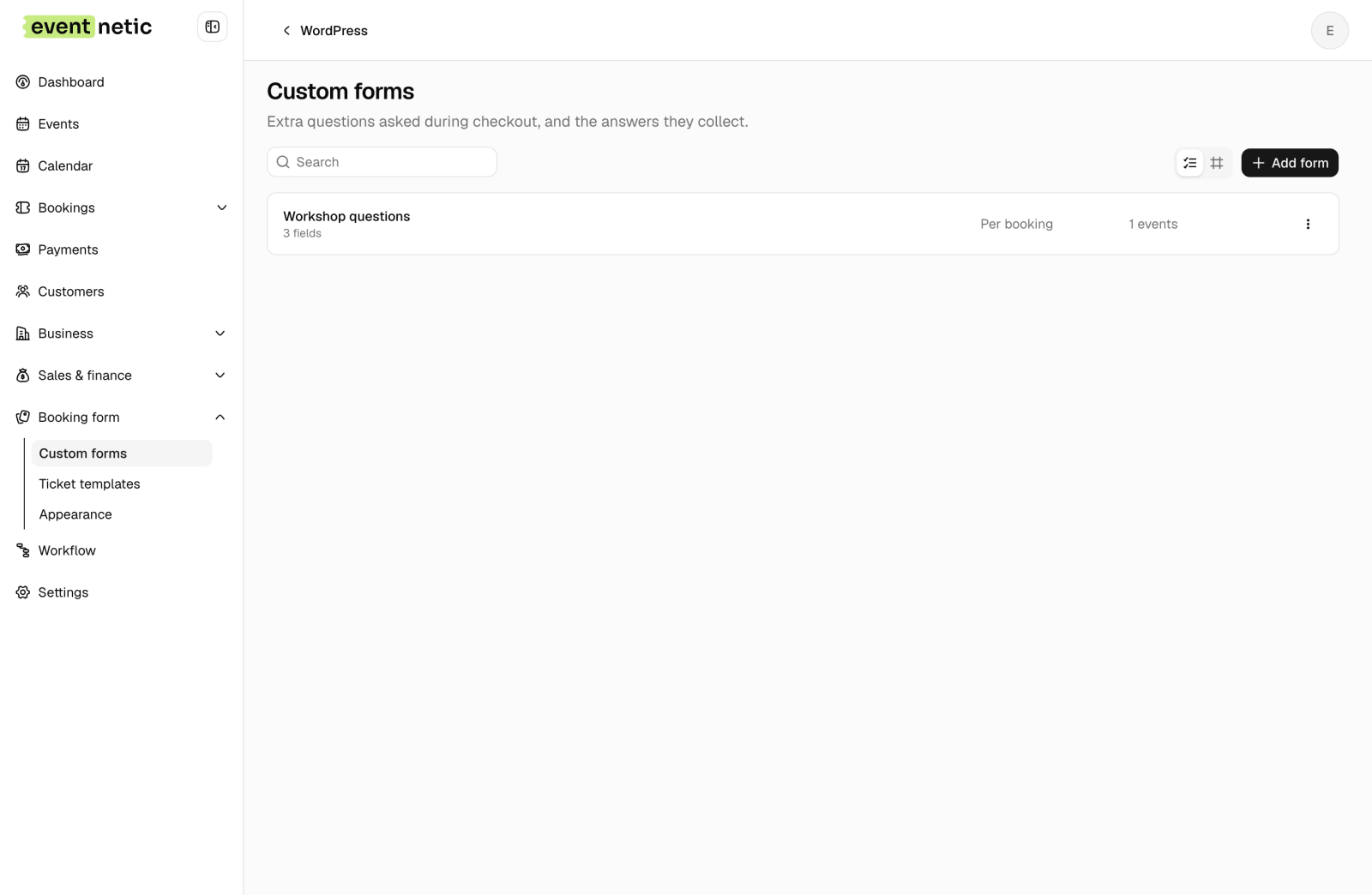
A form attaches to specific events, and asks either once per booking or once per attendee. That distinction does real work: dietary requirements are per person, an invoice address is per booking, and asking the wrong one either loses information or annoys somebody four times.
Step 7: the workshop is its own event
The pre-conference workshop runs the day before, holds twelve people, and costs €340 on its own.
It is a separate event rather than a ticket on the conference, because it has its own capacity, its own date and its own room. Twelve people is a table, not a hall, and it would be absurd for a workshop seat to draw from the auditorium's 400.
The rule of thumb: if it has its own capacity, it is its own event. If it is a price for the same room at the same time, it is a ticket type.
What we do not do
Two gaps worth knowing before you commit a conference to this.
No multi-track scheduling. There is no agenda builder, no speaker profiles and no per-session sign-up. If your attendees need to pick four sessions from twenty, that is a different product and we do not pretend otherwise.
No group or corporate tickets. A "table of ten" sold as one line is not something we can express, because one ticket produces one attendee. Ten people means ten tickets.
Everything here beyond the free basics is paid: VAT, invoices, custom forms and card payments all sit behind a licence.
Go and buy a pass
Lisbon Product Days is live with four ticket types, VAT on the total, invoices already raised, and the workshop the day before.
Open the conference demo and notice what the checkout does not ask you: there is no date to choose, because the pass is for all three days.
Every screenshot is the running demo, not a mock-up. Prices, allocations and the tax rate are read from it. Platform fees are Eventbrite's published organiser rates and Stripe's standard pricing, checked on 2 September 2026; both vary by country.


