Courses and passes
One booking for several dates: sell the whole course, a weekend pass or any four sessions, and let people in on each one.
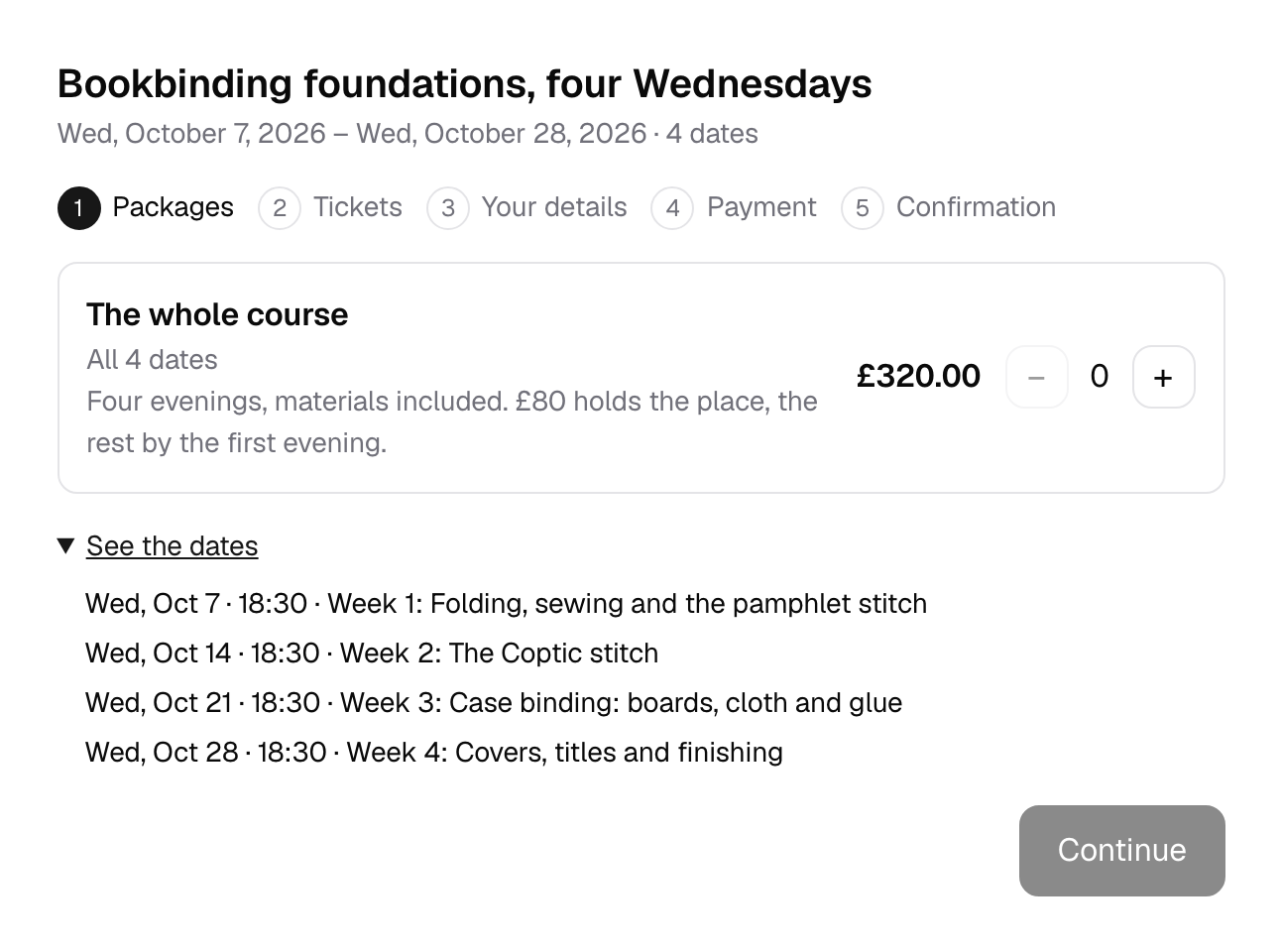
A pottery course is eight Tuesday evenings. A festival pass is the Friday and the Saturday. A class card is any ten classes of the term. Each of these is one purchase that covers several dates, and it should be sold as one.
One booking, several dates
A package can cover several dates of an event: every date, the dates you pick for it, or a number of dates the buyer chooses. The customer pays once, gets one confirmation, and the booking holds every date it covers.
Places are taken on each of those dates. A course of twelve that is full is full on every evening, and the single evenings sold beside it cannot oversell the room.
Or let people pick their evenings
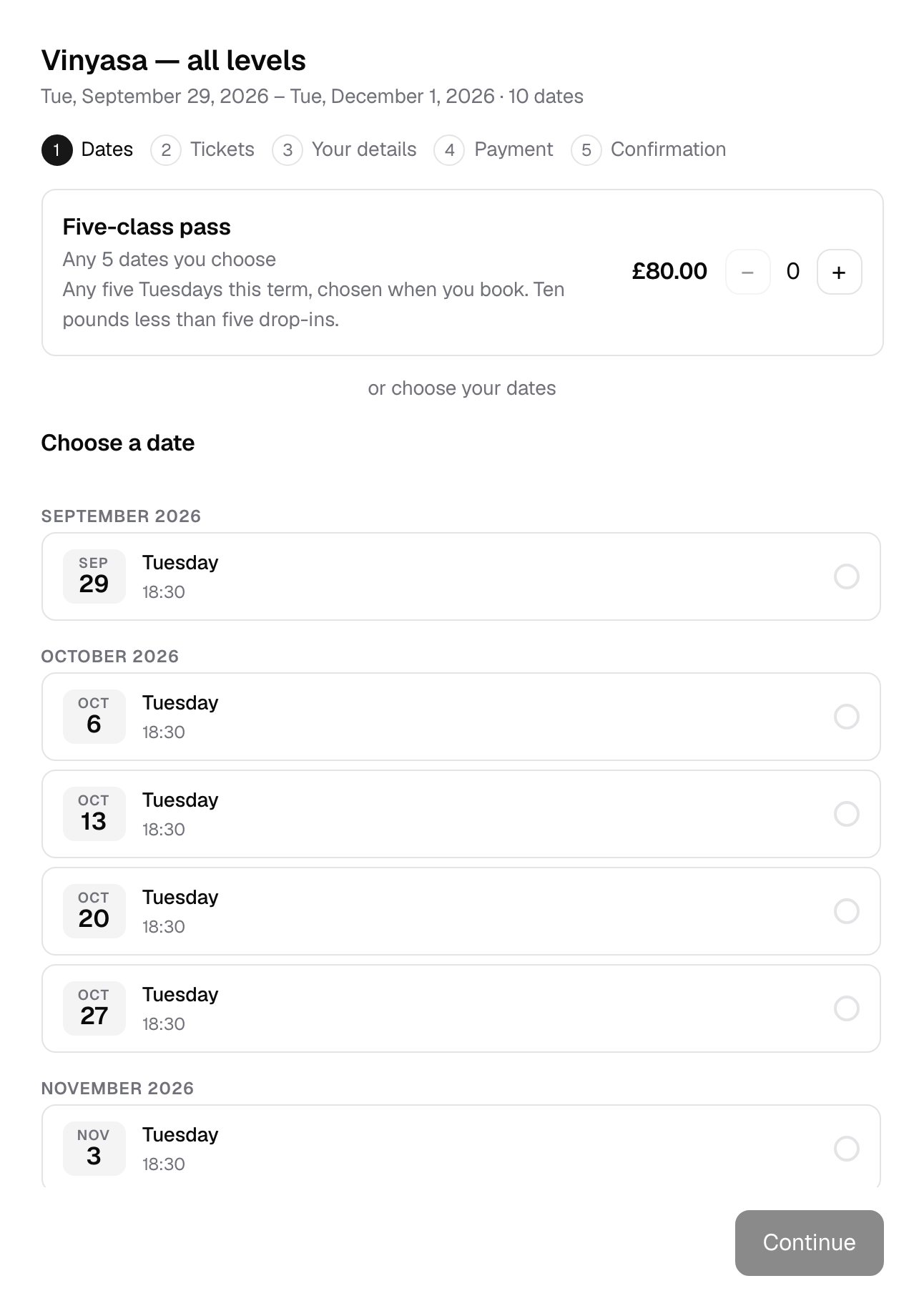
For drop-in classes there is a simpler switch: customers tick the dates they want and pay for each one. Three evenings at 20 come to 60, in one booking.
Each evening can be different
A date can carry its own session name, start time, room and number of seats. Lesson three is watercolour, in the other studio, and starts at seven. It shows wherever the date does.
What happens after
The door lets a course ticket in once on each evening, and asks which evening only when the scan cannot tell. Reminders go out before every date, not only the first. The confirmation can list all the dates with their session names, and the customer panel ticks off the ones already attended.
When the course is full
With the waiting list on, people can wait for the course itself. They are offered a place only when there is room on every date it covers.
More in Events and dates
One event carries as many dates as the season needs, and every date stands on its own.
Repeating dates
Recurring events: daily, weekly and monthly rules, with a name, time, room, capacity, price and attendee list kept per date.
Venues
Addresses kept once and attached to every event held there, with a map and directions on the page.
Staff on events
Assign hosts, instructors and speakers to an event, and show them on the page.
Online events
Zoom, Google Meet or any joining link, kept off the public page and sent only to people who booked.